
Ramp Related Details
A Complete Guide for Architects and Architecture Students
Ramps are essential architectural elements that provide smooth and accessible movement between different levels within a building or site. They play a crucial role in universal design, barrier-free accessibility, vehicular circulation, and user safety. Proper ramp detailing ensures compliance with accessibility standards, improves usability, and enhances the overall functionality of architectural projects.
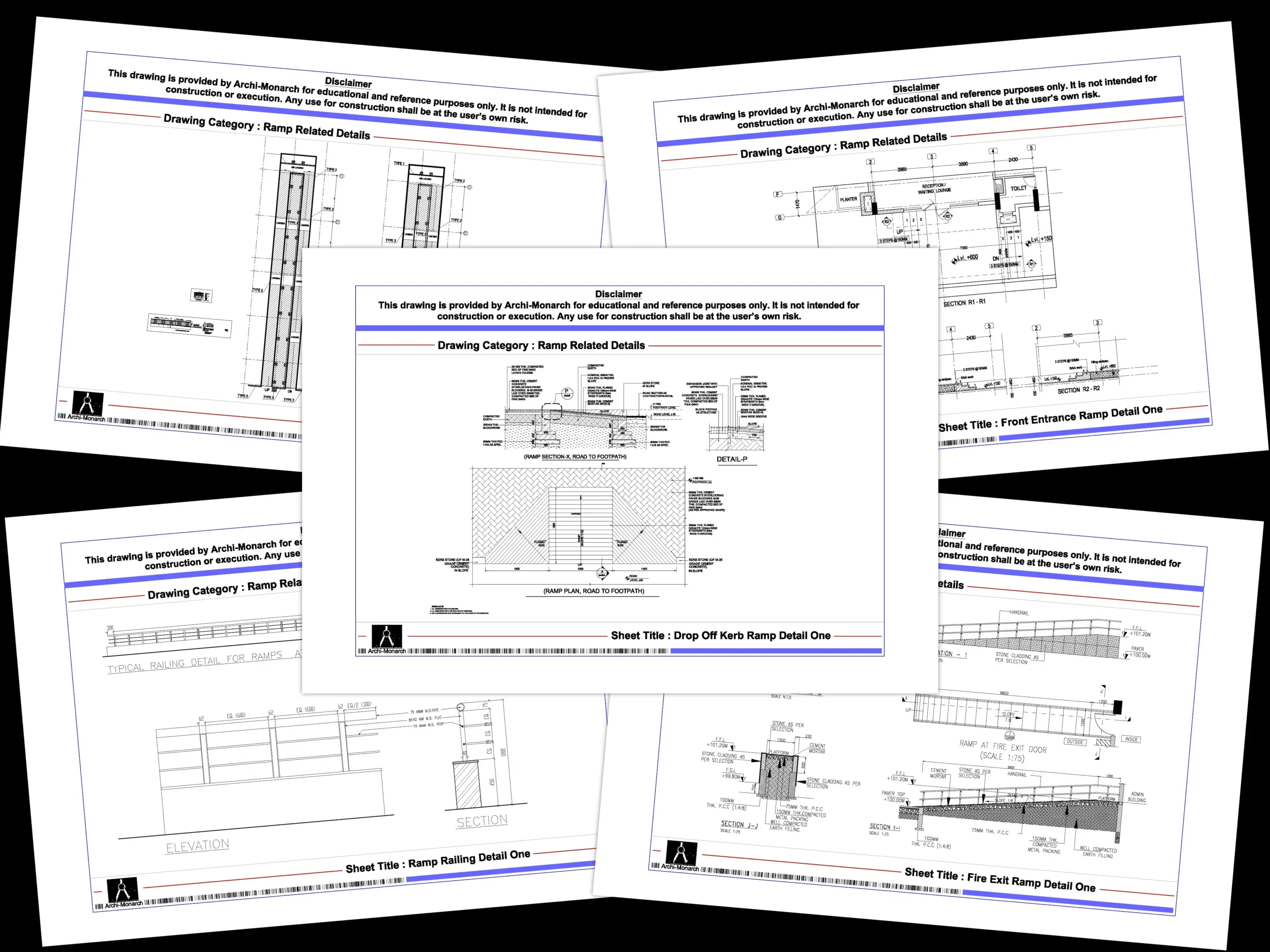
At Archi-Monarch.in, Ramp Related Details are available as digital downloadable AutoCAD DWG files for educational and reference use, helping architecture students, designers, and drafting professionals understand industry-standard ramp planning, construction, and detailing practices.
What Are Ramp Related Details?
Ramp Related Details are technical architectural drawings that illustrate the design, dimensions, slopes, structural assemblies, handrails, edge protection systems, drainage arrangements, and construction requirements of ramps.
These drawings typically include:
- Accessible ramp plans
- Vehicular ramp layouts
- Ramp sections and elevations
- Handrail details
- Kerb and edge protection details
- Landing details
- Drainage and waterproofing details
Proper detailing ensures safety, accessibility, durability, and regulatory compliance.
-
-40%
 Quick view
Drop Off Kerb Ramp Detail One
₹50.0Original price was: ₹50.0.₹30.0Current price is: ₹30.0. Add to cartAdd to WishlistAdd to Wishlist -
-25%
 Quick view
Front Entrance Ramp Detail One
₹100.0Original price was: ₹100.0.₹75.0Current price is: ₹75.0. Add to cartAdd to WishlistAdd to Wishlist -
-30%
 Quick view
Fire Exit Ramp Detail One
₹100.0Original price was: ₹100.0.₹70.0Current price is: ₹70.0. Add to cartAdd to WishlistAdd to Wishlist -
-40%
 Quick view
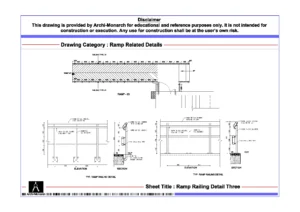
Ramp Railing Detail Three
₹125.0Original price was: ₹125.0.₹75.0Current price is: ₹75.0. Add to cartAdd to WishlistAdd to Wishlist
Importance of Ramp Details in Architectural Design
Ramps are critical circulation elements in both buildings and outdoor environments.
Why Ramp Details Matter
- Improve accessibility for all users
- Support universal design principles
- Facilitate wheelchair movement
- Enhance pedestrian safety
- Improve vehicular circulation
- Ensure regulatory compliance
- Increase usability of public spaces
Well-designed ramps contribute significantly to inclusive and functional architectural environments.
Components of a Ramp System
A ramp system consists of several interconnected architectural and structural elements.
1. Ramp Surface Details
The ramp surface provides the primary circulation path.
Common Materials
- Reinforced concrete
- Stone paving
- Textured tiles
- Non-slip coatings
- Asphalt surfaces
Key Considerations
- Slip resistance
- Durability
- Drainage performance
- User safety
2. Landing Details
Landings provide resting and maneuvering areas between ramp runs.
Functions
- Improve accessibility
- Facilitate directional changes
- Enhance user comfort
- Increase safety
Properly sized landings are essential for wheelchair accessibility.
3. Handrail Details
Handrails provide support and guidance for users.
Typical Components
- Handrail sections
- Support brackets
- End returns
- Balusters
- Connection details
Handrails improve safety and accessibility for people of all ages.
4. Edge Protection Details
Edge protection prevents accidental falls and wheelchair roll-off.
Common Components
- Raised kerbs
- Protective barriers
- Guardrails
- Wheel stops
These features improve user safety on elevated ramps.
5. Drainage Details
Proper drainage prevents water accumulation and surface deterioration.
Typical Features
- Surface gradients
- Drainage channels
- Catch basins
- Waterproofing systems
Good drainage design enhances ramp longevity and usability.
Types of Ramp Related Details
Different projects require different ramp configurations.
Accessible Ramp Details
Accessible ramps are designed to accommodate individuals with mobility challenges.
Applications
- Public buildings
- Educational institutions
- Hospitals
- Commercial facilities
- Residential developments
Benefits
- Inclusive access
- Improved mobility
- Compliance with accessibility guidelines
Vehicular Ramp Details
Vehicular ramps facilitate vehicle movement between different levels.
Common Applications
- Basement parking
- Multi-level parking structures
- Commercial developments
- Residential complexes
Design Considerations
- Vehicle turning radius
- Ramp gradients
- Surface durability
Basement Ramp Details
Basement ramps provide access to underground parking and service areas.
Key Features
- Drainage systems
- Waterproofing treatment
- Traffic safety provisions
- Structural support systems
Landscape Ramp Details
Landscape ramps integrate accessibility into outdoor environments.
Typical Applications
- Parks
- Gardens
- Public plazas
- Recreational facilities
These ramps support universal access while enhancing site design.
Common Components Included in Ramp Related Details
Professional ramp drawings contain several technical elements required for construction.
Essential Components
Architectural Plans
Show ramp layout, dimensions, and circulation routes.
Sections and Elevations
Illustrate slopes, level changes, and structural assemblies.
Handrail Details
Define support systems and installation requirements.
Landing Details
Specify resting areas and directional changes.
Surface Finish Details
Describe materials and slip-resistant treatments.
Construction Notes
Provide specifications and installation guidelines.
These components help ensure accurate construction and long-term performance.
Benefits of Using Ramp Related Details from Archi-Monarch.in
Professionally drafted ramp drawings provide valuable educational and practical benefits.
Key Benefits
- Ready-to-use AutoCAD DWG files
- Industry-standard detailing practices
- Educational and reference-focused content
- Improved understanding of accessibility design
- Time-saving drafting resources
- Easy customization for project requirements
These resources help users improve architectural detailing and technical documentation skills.
Best Practices for Ramp Detailing
Successful ramp design requires careful planning and coordination.
Maintain Appropriate Slopes
Use safe and comfortable gradients suitable for the intended users.
Ensure Adequate Width
Provide sufficient space for pedestrian and wheelchair movement.
Incorporate Slip-Resistant Surfaces
Select materials that improve safety under wet and dry conditions.
Provide Proper Drainage
Prevent water accumulation and surface damage.
Install Durable Handrails
Ensure handrails meet ergonomic and safety requirements.
Coordinate with Site Design
Integrate ramps seamlessly with pathways, entrances, and circulation systems.
How to Create Effective Ramp Details
Developing professional ramp drawings requires a structured design process.
Step-by-Step Process
1. Analyze Accessibility Requirements
Determine user needs and project-specific accessibility goals.
2. Calculate Ramp Geometry
Establish slopes, lengths, widths, and landing requirements.
3. Select Construction Materials
Choose materials based on durability and maintenance requirements.
4. Coordinate Structural Systems
Ensure adequate support and load-bearing capacity.
5. Prepare Detailed Drawings
Develop plans, sections, elevations, and enlarged construction details.
6. Verify Safety and Compliance
Review dimensions, handrails, and accessibility provisions.
Use Cases of Ramp Related Details
Ramps are used in a wide range of architectural and infrastructure projects.
Common Applications
- Residential developments
- Apartment complexes
- Commercial buildings
- Shopping malls
- Hospitals
- Educational institutions
- Airports
- Public parks
- Parking structures
- Mixed-use developments
Each project requires ramp systems tailored to circulation and accessibility needs.
Ramp Related Details for Educational and Reference Use
Ramp design is a fundamental aspect of architectural planning and universal design.
Educational Benefits
- Learn accessibility design principles
- Understand circulation planning
- Improve construction detailing skills
- Develop technical drafting expertise
- Study safety and usability requirements
- Strengthen professional portfolios
Archi-Monarch.in provides Ramp Related Details specifically for educational and reference use, helping students and professionals gain practical exposure to accessible design and construction documentation.
Conclusion
Ramp Related Details are essential components of modern architecture, supporting accessibility, safety, and efficient circulation. Proper detailing ensures that ramps are functional, durable, and compliant with accessibility and construction standards.
For architecture students, designers, and drafting professionals, understanding ramp construction and detailing is a valuable skill that enhances project quality and technical documentation capabilities.
Archi-Monarch.in offers professionally drafted Ramp Related Details in AutoCAD DWG format for educational and reference use, helping users improve their knowledge of accessibility design, circulation planning, and architectural detailing practices.
Internal-Link-Friendly Related Topics
Readers interested in Ramp Related Details may also explore:
Related Architectural Categories
- Ramp Details
- Staircase Details
- Lift Details
- Architectural Construction Details
- Landscape Standard Details
- Balcony Railing Details
- Architectural Standard Details
- Fire Fighting Details
- AutoCAD Blocks
- SketchUp Files
These resources help users build a comprehensive understanding of architectural circulation systems, accessibility planning, and technical detailing.
Recent Posts
Blog Categories
Featured Drawings
-
-15%
 Quick view
Toilet Detail Fifty
₹350.0Original price was: ₹350.0.₹299.0Current price is: ₹299.0. Add to cartAdd to WishlistAdd to Wishlist -
-34%
 Quick view
Ramp Detail One
₹300.0Original price was: ₹300.0.₹199.0Current price is: ₹199.0. Add to cartAdd to WishlistAdd to Wishlist -
-25%
 Quick view
Ramp Detail Six
₹300.0Original price was: ₹300.0.₹225.0Current price is: ₹225.0. Add to cartAdd to WishlistAdd to Wishlist -
-15%
 Quick view
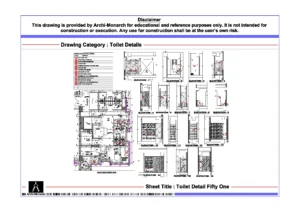
Toilet Detail Fifty One
₹350.0Original price was: ₹350.0.₹299.0Current price is: ₹299.0. Add to cartAdd to WishlistAdd to Wishlist -
-15%
 Quick view
Toilet Detail Fifty Two
₹350.0Original price was: ₹350.0.₹299.0Current price is: ₹299.0. Add to cartAdd to WishlistAdd to Wishlist -
-35%
 Quick view
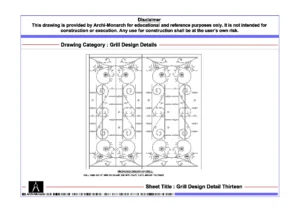
Grill Design Detail Thirteen
₹75.0Original price was: ₹75.0.₹49.0Current price is: ₹49.0. Add to cartAdd to WishlistAdd to Wishlist -
-30%
 Quick view
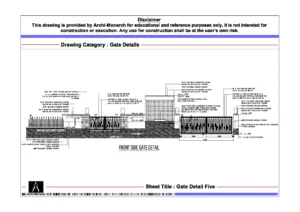
Gate Detail Five
₹250.0Original price was: ₹250.0.₹175.0Current price is: ₹175.0. Add to cartAdd to WishlistAdd to Wishlist -
-15%
 Quick view
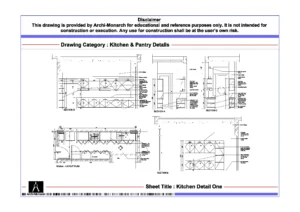
Kitchen Detail One
₹175.0Original price was: ₹175.0.₹149.0Current price is: ₹149.0. Add to cartAdd to WishlistAdd to Wishlist -
-57%
 Quick view
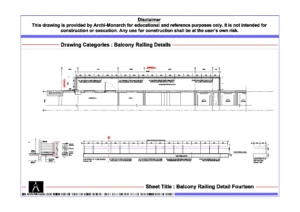
Balcony Railing Detail Fourteen
₹175.0Original price was: ₹175.0.₹75.0Current price is: ₹75.0. Add to cartAdd to WishlistAdd to Wishlist -
-34%
 Quick view
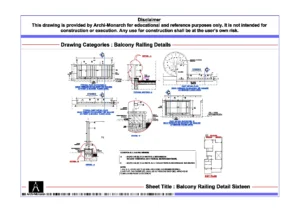
Balcony Railing Detail Sixteen
₹150.0Original price was: ₹150.0.₹99.0Current price is: ₹99.0. Add to cartAdd to WishlistAdd to Wishlist