


Description
The Inspection Chamber And Gully Trap Detail provides a professionally prepared architectural plumbing drawing set in DWG format for educational and reference purposes. Gully traps and inspection chambers are essential components of building drainage systems that ensure efficient wastewater flow, odor control, and system accessibility. The gully trap collects wastewater from bathrooms, kitchens, and wash areas while preventing foul gases from entering the building.
The inspection chamber provides access for cleaning, maintenance, and inspection of underground drainage pipelines. Designers must carefully coordinate both components to ensure proper flow alignment, hygiene, and long-term durability. Therefore, architecture students and drafting professionals must understand gully trap and inspection chamber detailing to design efficient drainage systems.
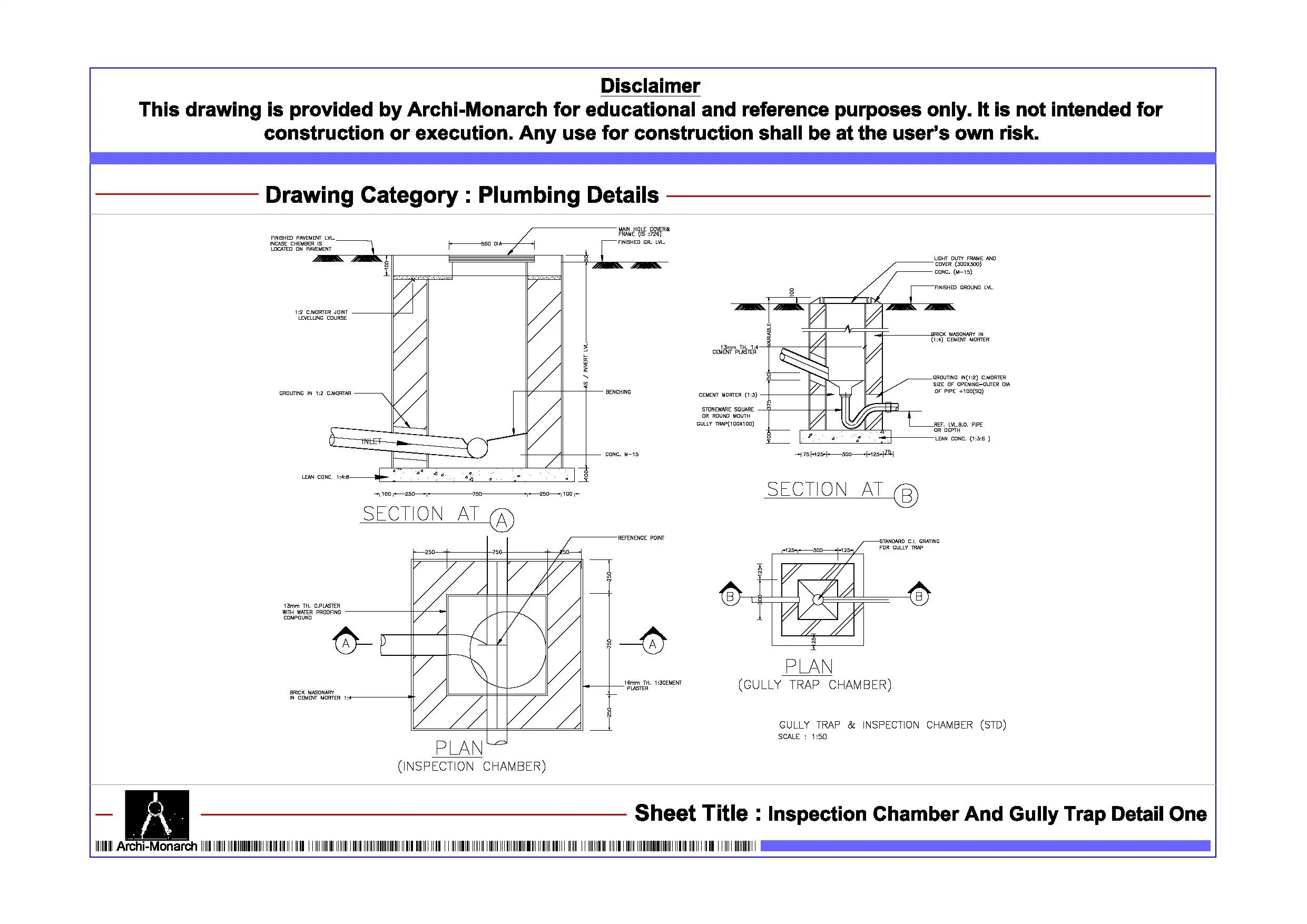
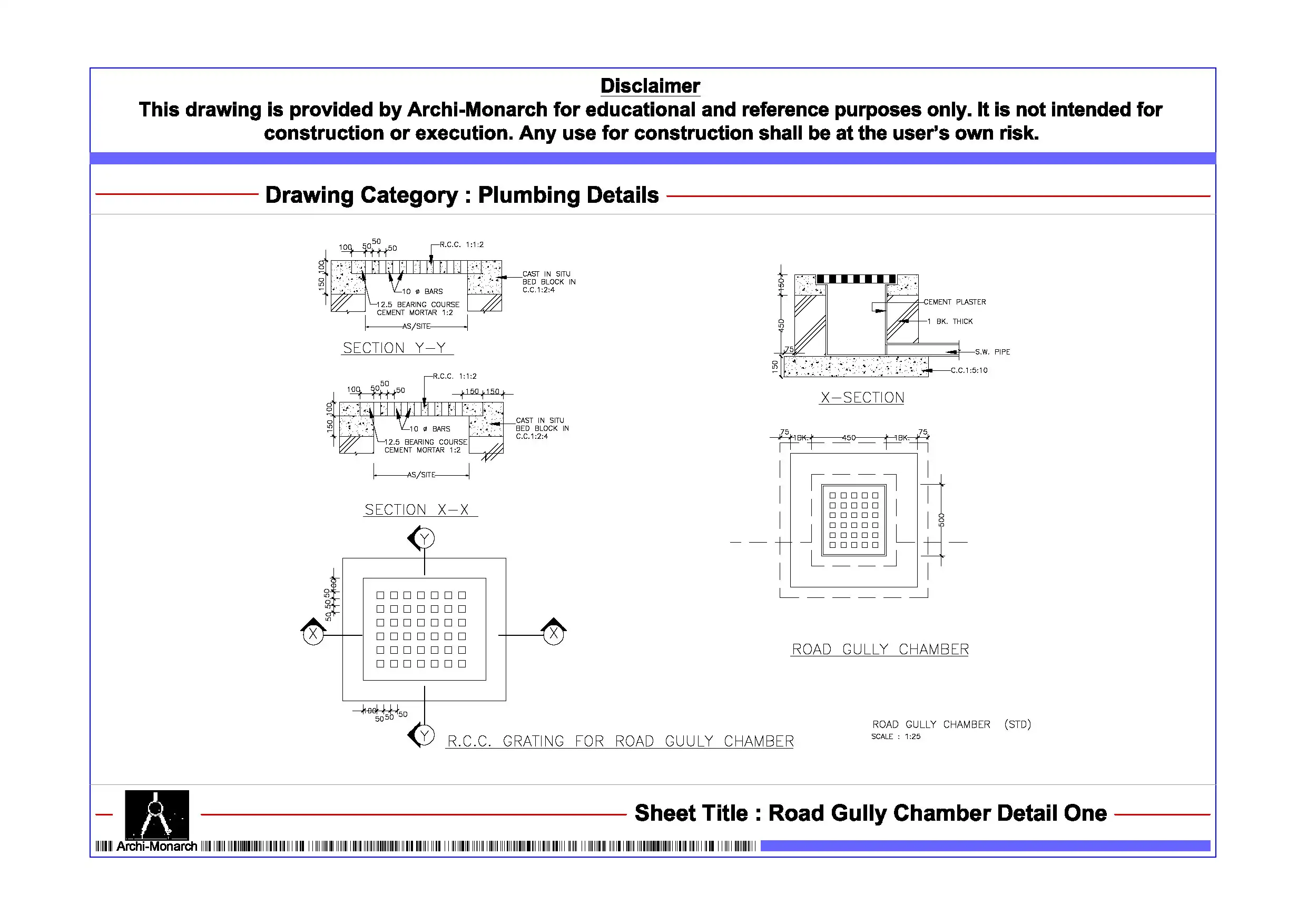
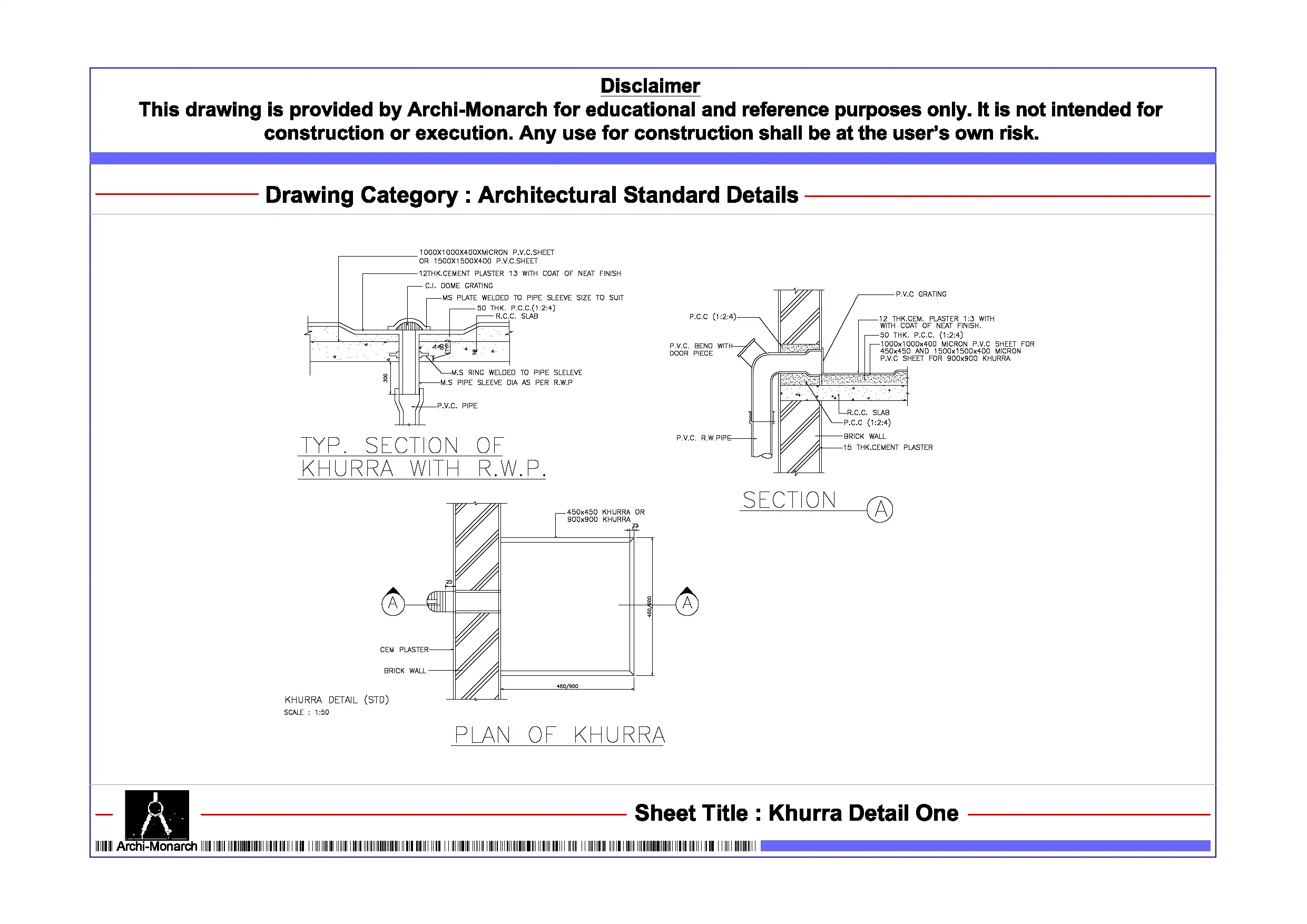
This architectural CAD package clearly presents combined gully trap and inspection chamber construction through detailed drawings. It includes sectional details, plan layouts, and construction-specific information in a structured and coordinated format. The drawing set explains trap positioning, chamber alignment, pipe connections, and flow direction within the drainage network. It also highlights key components such as gully trap chambers, inlet and outlet pipes, inspection chamber walls, benching, cover slabs, and grating covers.
In addition, it covers pipe slopes, jointing methods, and hydraulic flow principles that ensure smooth wastewater movement and prevent blockages. The drawings also address construction aspects such as RCC or masonry chambers, waterproofing, plastering, and load-bearing covers suitable for pedestrian or vehicular areas. Maintenance access and cleaning provisions are also included for long-term serviceability. As a result, users gain practical insight into designing integrated drainage systems that improve efficiency, reduce maintenance issues, and enhance overall sanitation performance.
Moreover, the drawings follow professional architectural and drafting standards. They use accurate dimensions, clear line hierarchy, and well-organized annotations. Consequently, students can easily interpret the drawings and apply similar detailing techniques in academic projects and CAD exercises. Users can edit the files freely to modify chamber sizes, adjust pipe layouts, or refine detailing to suit different site conditions and project requirements.
The DWG format ensures seamless compatibility with AutoCAD and other commonly used CAD software. Therefore, users can directly integrate these drawings into project workflows, presentations, and documentation sets without additional conversion. In addition, the drawing set supports coordination between plumbing systems, civil works, and underground infrastructure, which improves drafting clarity and technical accuracy.
Key Highlights:
- Inspection chamber and gully trap detail drawing in DWG format
- Intended strictly for educational and reference use
- Includes sectional and plan details
- Shows gully trap, inspection chamber, and pipe connections
- Covers flow direction, benching, and maintenance access
- Prepared using professional architectural and drafting standards
- Fully editable and AutoCAD-compatible CAD files
- Suitable for architecture students and drafting learners
This drawing set does not serve as a construction-ready document. Always consult qualified civil and plumbing engineers before applying any detail in real projects.








Reviews
There are no reviews yet.