

Description
The Fencing Detail is a carefully prepared architectural drawing provided in DWG format for educational and reference use only. Boundary and enclosure elements play a vital role in defining site limits, ensuring safety, and improving visual character. Therefore, understanding fencing construction and detailing is essential for architecture students and beginner architects.
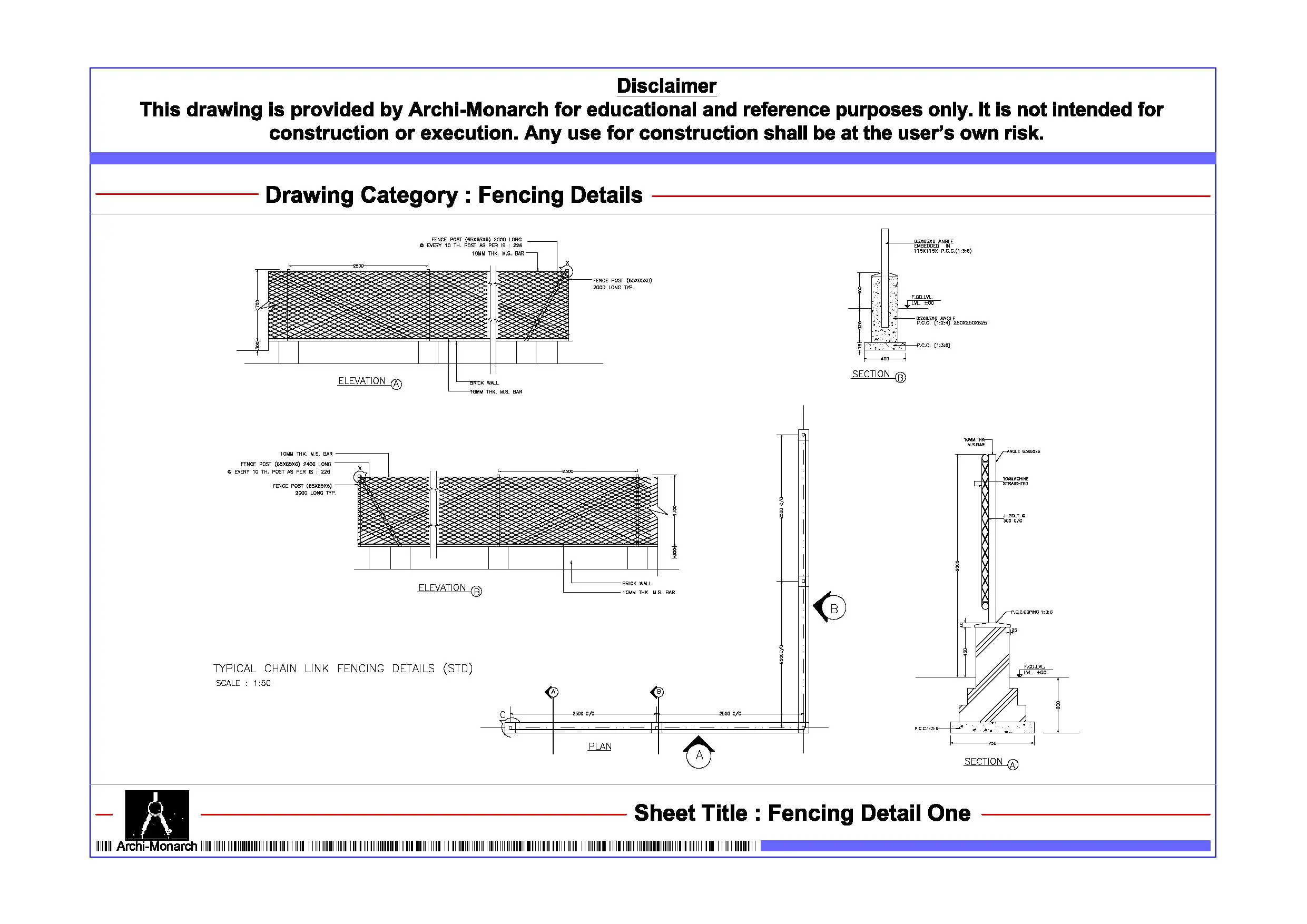
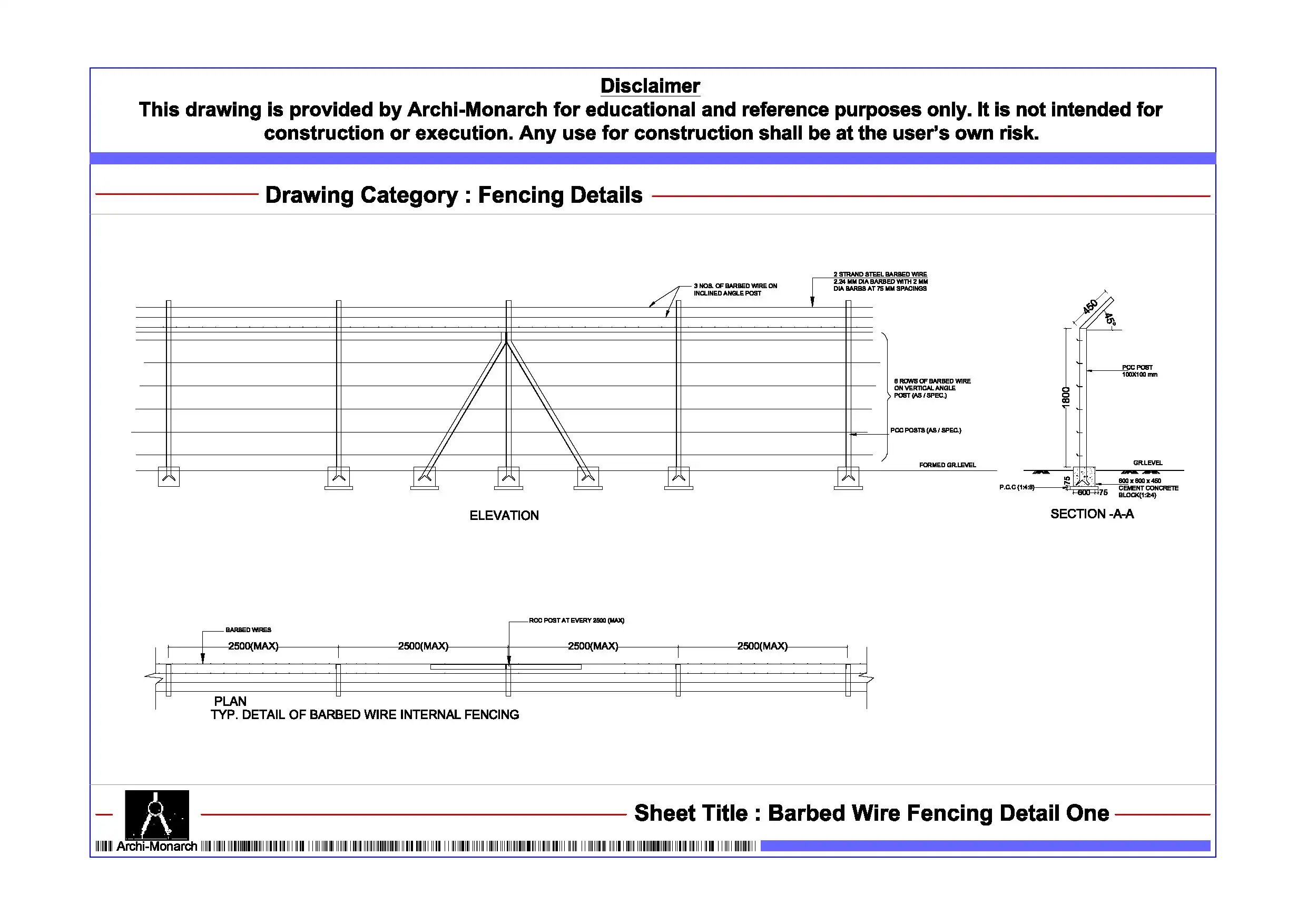
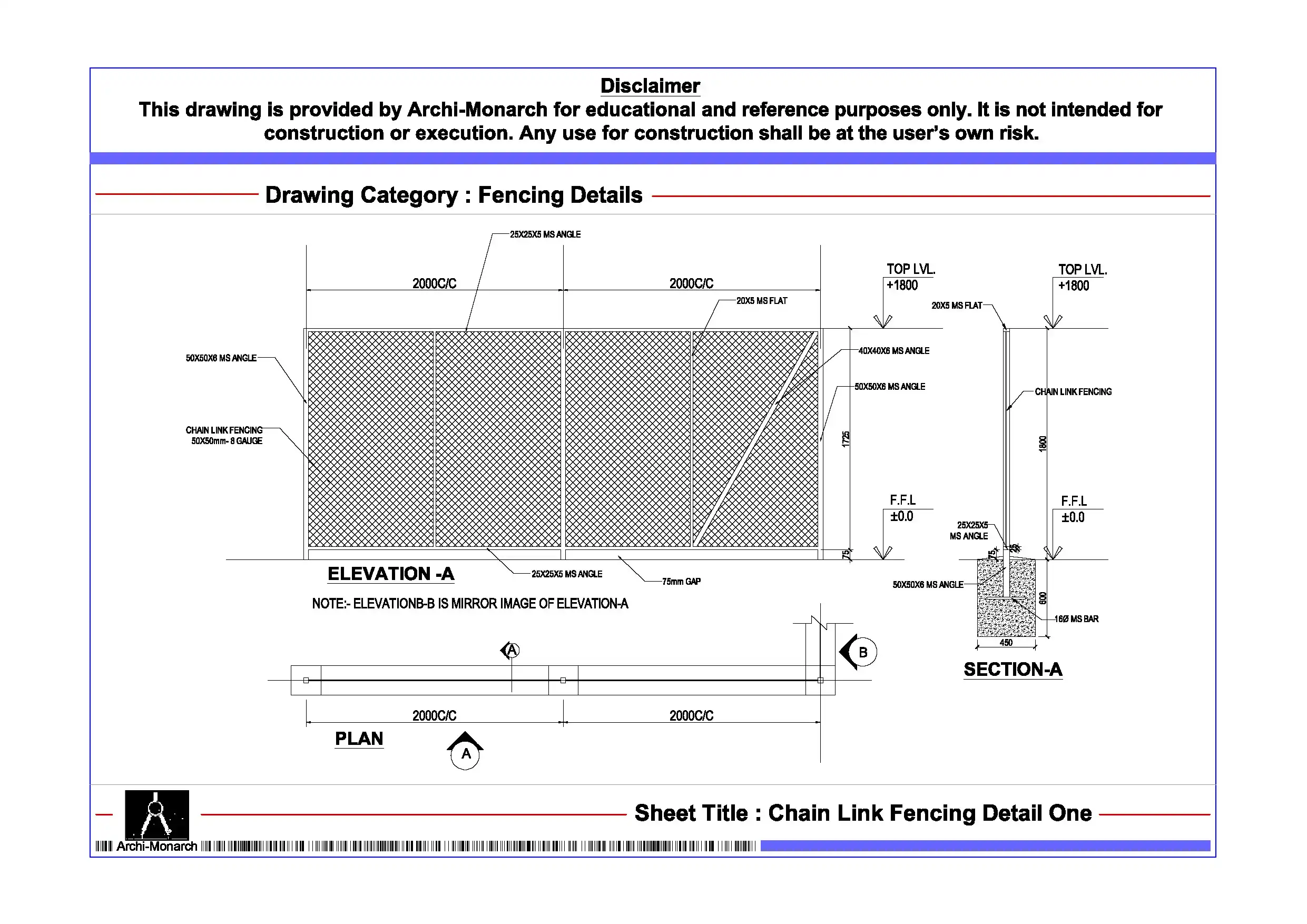
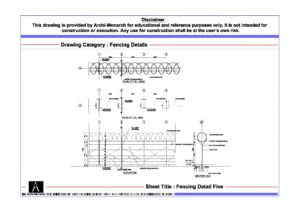
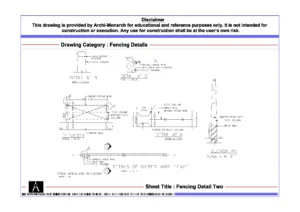
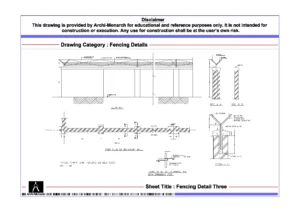
This architectural drawing explains typical components used in site fencing, including vertical posts, horizontal members, infill panels, base foundations, fixing methods, and ground-level connections. The layout follows standard drafting practices, which helps learners study proportions, material representation, and technical clarity. As a result, students gain a strong understanding of how fencing integrates with site planning and landscape design.
In addition, the drawing demonstrates proper dimensioning, annotation styles, and line hierarchy used in professional architectural documentation. These elements help users improve CAD drafting skills while preparing studio assignments, academic submissions, and learning exercises. Because the drawing remains editable, students can analyze, modify, and practice detailing using AutoCAD or compatible software.
The DWG file format allows smooth compatibility with most CAD platforms. This feature supports hands-on learning and encourages experimentation with design alternatives. Moreover, the drawing assists beginners in understanding how site boundaries align with levels, pavements, and adjacent architectural elements.
Key Highlights:
- Architectural site enclosure drawing in DWG format
- Intended strictly for educational and reference purposes
- Illustrates posts, panels, fixing, and foundation details
- Drafted using professional architectural standards
- Helpful for architecture students and early-stage professionals
- Editable CAD file compatible with AutoCAD software
- Supports learning in site planning and boundary design
This drawing does not serve as a construction-ready document. Users must consult qualified architects or engineers before applying any detail to real projects.
Overall, this downloadable resource acts as a valuable learning aid for understanding boundary treatments in architectural design. It strengthens technical knowledge while helping learners develop confidence in drafting, detailing, and architectural documentation practices.






Reviews
There are no reviews yet.