



Description
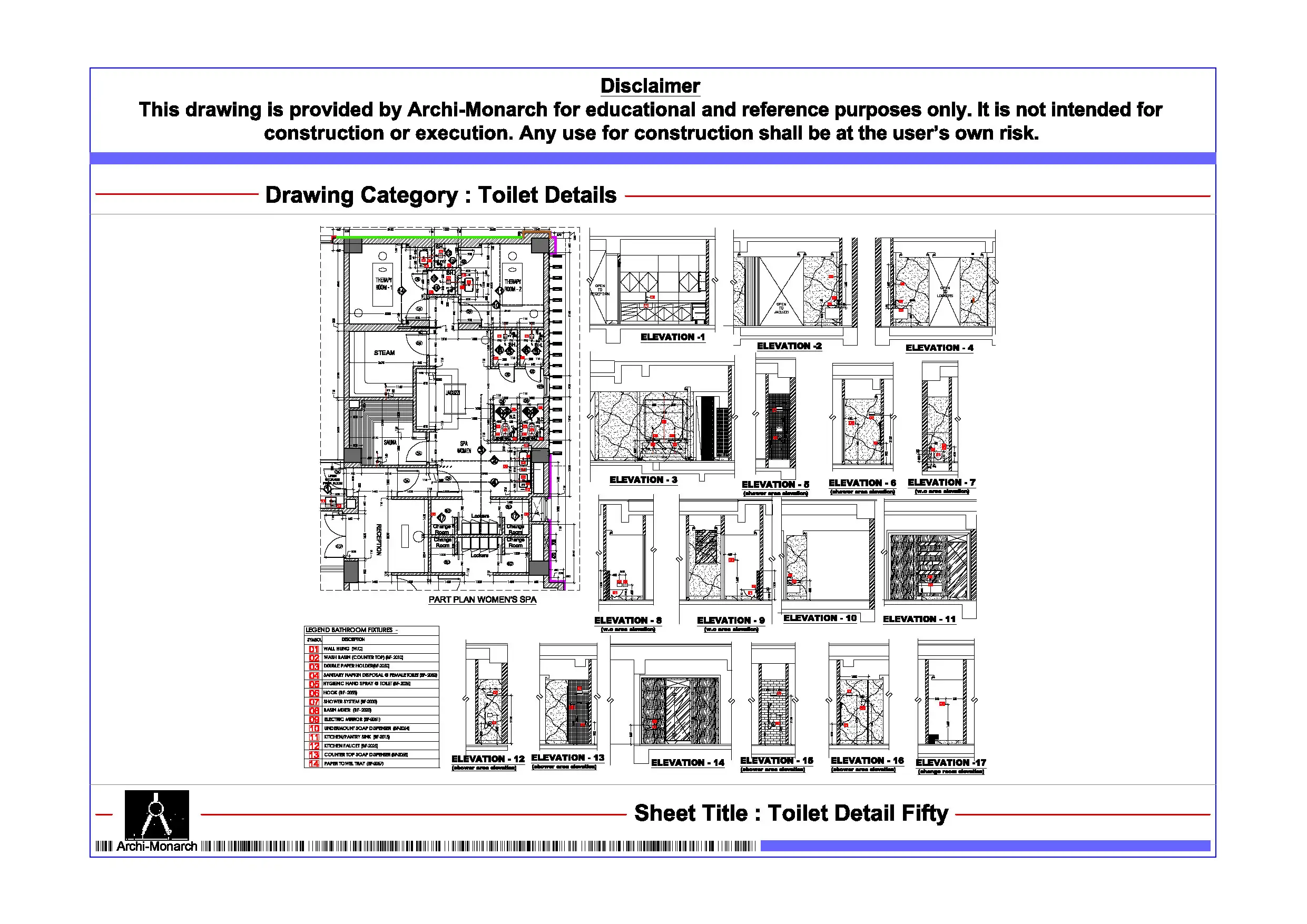
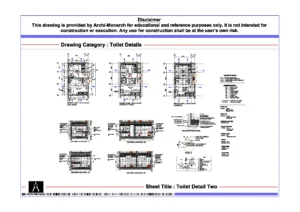
The Toilet Accessories Detail is a professionally prepared architectural toilet drawing in DWG format. It serves educational and reference purposes. Toilet accessories play a vital role in ensuring usability, hygiene, and comfort in washroom design. Therefore, proper placement and detailing improve accessibility and user convenience. As a result, well-organized accessory layouts enhance overall functionality and space efficiency.
This DWG file provides a detailed toilet accessories layout system. In addition, it suits residential bathrooms, commercial washrooms, hotels, hospitals, offices, and public sanitation facilities. The drawing includes accessories such as towel rods, soap dispensers, mirrors, toilet paper holders, hand dryers, grab bars, and shelving units, along with recommended mounting heights and spacing guidelines.
Furthermore, it allows users to study layout coordination and ergonomic planning. Moreover, it helps define performance aspects such as accessibility, hygiene, safety, and ease of maintenance. Consequently, users can design efficient and user-friendly toilet spaces.
Moreover, the drawing follows professional architectural and interior design standards. It maintains proper scale, clear annotations, and organized layers. As a result, it ensures clarity and smooth workflow. Therefore, students can easily understand toilet detailing principles and ergonomic design concepts. Similarly, professionals can use it as a reference for working drawings and execution details. The file remains fully editable, so users can customize it as required. In addition, they can adapt it to suit different user needs, space sizes, and accessibility standards.
The DWG format ensures compatibility with AutoCAD and similar drafting software. Thus, users can open, edit, and integrate the drawing easily. This also helps save time during design development. Furthermore, it supports coordination with architectural, interior, and plumbing drawings.
This toilet accessories detail suits various project types. For example, designers use it in residential bathrooms, commercial restrooms, public facilities, and hospitality projects. Overall, it supports both academic learning and professional workflows.
Key Highlights:
- Toilet accessories detail drawing in DWG format
- Intended for educational and reference use only
- Includes accessory placement, heights, and layout coordination
- Suitable for residential and commercial washroom design
- Helps define usability, hygiene, and accessibility
- Fully editable and easy to customize
- Compatible with AutoCAD and similar software
- Suitable for students and professionals
This drawing is not a construction-ready document. Therefore, always consult qualified professionals before using it in real projects.







Reviews
There are no reviews yet.